Choose Seasonings Around the Meals You Already Cook
Build a useful spice cabinet around three familiar meals. Check the labels, try one flavor at a time, and give every new bottle a purpose.
A spice cabinet can become a collection of good intentions. One bottle for a recipe you never made. Two versions of the same blend. Something in the back that has apparently been paying rent since the last move.
Before adding another bottle, give it a job. Start with the food you actually cook, decide what flavor you want, and check whether something you already own can do it.
Start with three familiar meals
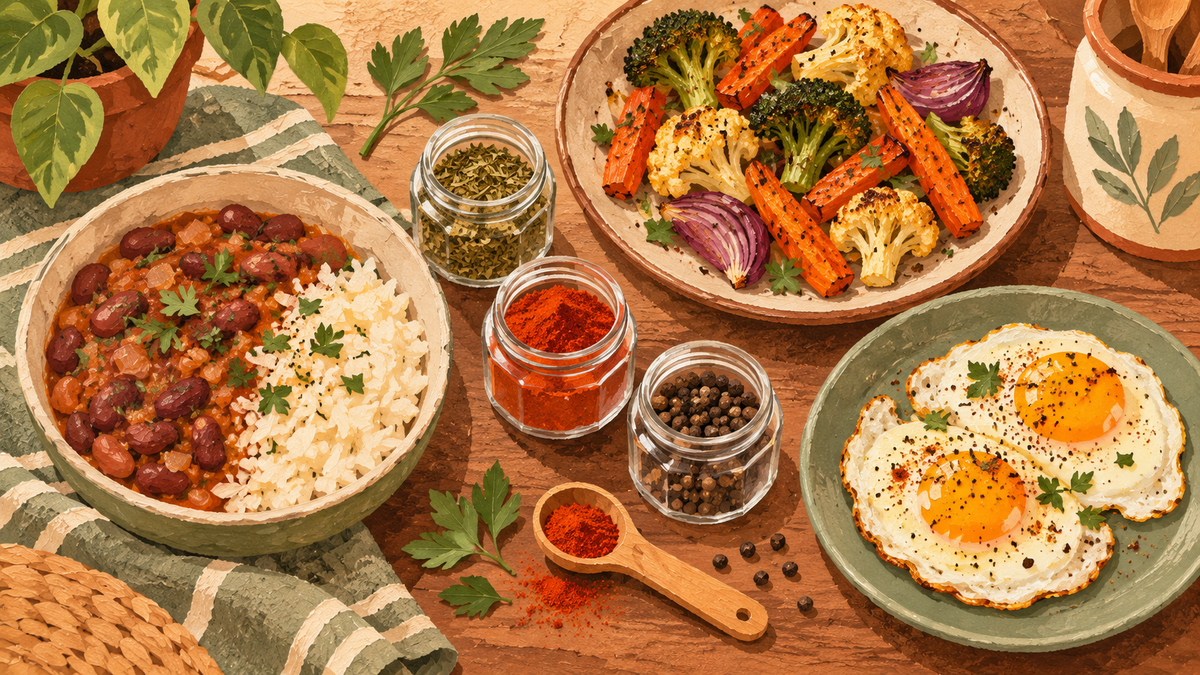
Write down three meals you make often enough to recognize without opening a cookbook. They might be beans and rice, roasted vegetables, and eggs. Your list might look completely different. That is the point: build around your household's food.
Beside each meal, write one flavor direction you enjoy. Here are possibilities to consider, not fixed recipes:
- Beans and rice: earthy cumin, garlic, or a little smoky paprika.
- Roasted vegetables: an herbal direction with thyme or oregano, or the warmth of black pepper.
- Eggs: chives, black pepper, or a pepper blend with a heat level you like.
You do not need every option. Circle the ingredients that appear more than once, then check the cabinet. A seasoning that fits two regular meals has a clearer purpose than one bought for an imaginary dinner party.
Choose convenience or control
A blend can make sense when you like its flavor and want fewer jars to open. Individual herbs and spices let you change the balance: more garlic, less heat, a different herb next time.
Neither choice earns extra cooking points. Choose the one that makes dinner workable.
Read the actual ingredient list before deciding. Garlic powder and garlic salt are different purchases. A blend may already include salt, sugar, or several seasonings you planned to add separately. Check its directions, too, rather than treating every bottle as interchangeable.
If you cook for someone with a food allergy, read all the ingredient information each time you buy. Formulations can change, and a separate “Contains” statement is not always present. The FDA's label-reading guide explains what to look for and when to check with the manufacturer.
Try a small portion before the whole pot
When you are unsure about a new flavor, set aside a small portion of fully cooked food and add a little seasoning to that. Taste it before changing the rest of dinner. Keep raw meat and uncooked mixtures out of the tasting experiment.
The University of Delaware's herb and spice guide recommends starting conservatively and testing combinations in a small portion of soup or stew. You can add more; removing an overpowering flavor is a different project.
Change one thing at a time. If you add three blends at once, it is harder to know which one you liked. A quick note on your phone is enough: “Good on the beans; use less next time.”
Make the useful bottles easy to reach
Keep the seasonings you use regularly together, with their labels visible. Put duplicates behind the open bottle so you can see what you own before buying more.
Store dried herbs and spices in a cool, dry place away from the stove, following package instructions. Delaware Extension specifically advises against storing them over the range. Convenient does not have to mean directly above the steam.
Give one seasoning a job this week
Pick one familiar meal, one seasoning already in your cabinet, and one small adjustment you want to try. Write down what worked.
If there is still a gap, your shopping note can be specific: “A mild herb blend for vegetables,” instead of “Buy more spices.” That is a cabinet built around dinner. Everything in it has somewhere to go.